Key Takeaways
- Chasing piles of leads isn't the smartest move. It pays off to zero in on your most valuable accounts instead.
- Get sales and marketing on the same page so everyone's working toward the same goals.
- Don't just blast out generic messages-take time to personalize your outreach based on real research into each account.
- Track what really matters: the quality of your pipeline, how deals move forward, and, of course, the revenue you bring in.
Account-based marketing (ABM) is all about building real relationships with key companies. Too often, B2B marketers scatter their efforts across thousands of leads, most of which never pan out. ABM flips the script. Instead of trying to talk to everyone, you hone in on select companies, map out exactly who's involved in decisions, and develop campaigns that actually speak to their needs.
This approach works best when deals take a long time to close, contracts are high-value, and lots of people on the buyer's side influence the purchase. But you have to be focused-just emailing a smaller list isn't enough if what you're sending still feels generic. Here, we dive into how ABM really functions, how to create a plan that makes sense, which tools to consider, and how to measure if you're actually moving the needle.
How Account-Based Marketing Improves B2B Results?
In account-based marketing, each of the companies that is a target is a market of its own, and marketing activities are specifically linked to sales opportunities.
How B2B Account-Based Marketing Works?
The first step of B2B account-based marketing is identifying the company that matches the ideal customer profile. Marketing then studies the accounts, finds the appropriate decision makers, and organises outreach efforts in a manner that's across all channels.
Instead of sending the same piece of email to thousands of contacts each, teams create messaging that's tailored to what they think is going to matter for each account. A cybersecurity vendor could work with financial service firms with complicated compliance requirements, and a software vendor could work with manufacturers that have a lack of connectivity among systems.
Relevance, not more activity.
Account-Based Marketing Benefits for Revenue Teams
You can get the bulk of the benefits with account-based marketing by spending more of your time and more of your budget on the accounts that have a better yield. Sales teams have context from which to start interactions with prospects; marketing can craft content that actually assists in a sale.
Additional benefits include increased department alignment, multiple stakeholder engagement, and increased transparency of account progressions. But results aren't guaranteed, either. Even with good budgeting, it's possible to waste money on an ineffective program by targeting the wrong or less effective groups or by having a lack of follow-up.
Also Read: B2B Prospecting Strategies for More Leads that Convert Fast
Building an Account-Based Marketing Strategy
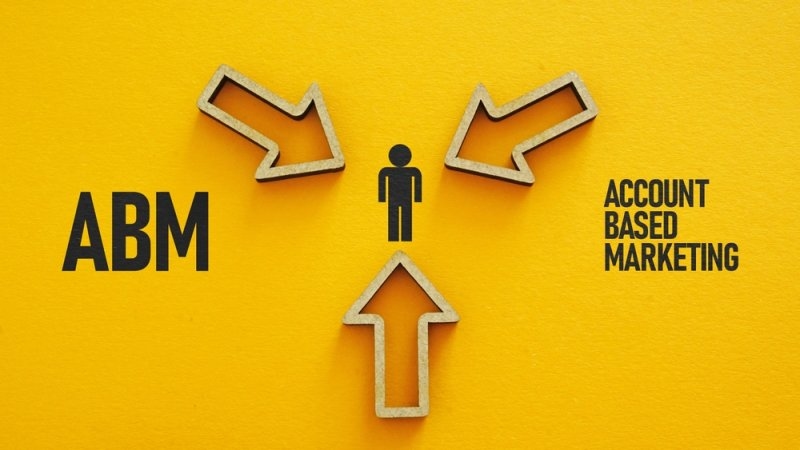
An Account-Based Marketing strategy is a useful technique that ties the purchase selection and research, message creation, delivery, and measurement together into a functional cascade.
How to Create an Account-Based Marketing Strategy?
Formulate a clearly defined business objective. It could be securing new enterprise business, growing existing business, or going after a certain industry. Then identify a set of accounts that are viable to realize that goal.
Including these steps in a practical account-based marketing plan:
- Create your desired client avatar. Narrow down the market according to company size, industry, technology, location, budget, and needs of business.
- Select target accounts. Integrate firmographic data, buying signals, customer relationships, and contract value.
- Map buying groups. Find out about decision-makers, technical assessors, budget owners, and influencers.
- Develop relevant messaging. Link your product to particular issues and challenges instead of general statements.
- Coordinate outreach. Keep advertising and email/sales calls, events, and follow-ups aligned.
- Review results. Gain insights on engagement, meetings, opportunities, and revenue per account.
Owners are required for each step. Otherwise, it is a series of unrelated bits of work.
How to Identify Target Accounts for Account-Based Marketing?
The customer's accounts should be appropriate to the company's product, purchasing habits, and business objectives. Identifying which industries attract longer customer tenure, target for increased contract periods, or higher margins is highlighted through the existing customer data.
Sales intelligence also enables businesses to locate companies that demonstrate a positive intent, such as hiring for a new ability, venturing into a new market where the product fits, or leveraging it to grow more rapidly. These signals should not be assumed as a sign of a business being ready to purchase. They facilitate research prioritization for teams.
Suggested Reading: What is Product Marketing and Why Does it Matter?
Account-Based Marketing Examples and Campaigns
Effective ABM campaigns link an actual business problem to a meaningful interaction, providing sales teams with something to talk about.
Think of a software vendor for supply chain analytics, to companies that make products. Instead of pursuing a "warm-fishing" strategy targeting the potential productivity of the general, it chooses 30 manufacturers, digs down to identify common issues faced in the operation, and develops specific messages for operations managers and finance executives.
An example of this is a cybersecurity company that attacks healthcare technology companies. It could provide an in-depth security review, transmission of pertinent risk data, and a technical conversation between the purchasing group.
The following are examples of account-based marketing because the message is congruent with the context of the account. Personalization should be helpful and not annoying.
Account-Based Marketing Best Practices for Better Engagement
Coordination is where it all starts with ABM best practices. Sales should be able to inform marketing of which accounts they are talking to, what has already been discussed, and what info is needed for the next step.
When making predictions, it is important to be careful not to overpersonalize (based on limited assumptions). The problems that a business in the healthcare industry has can vary depending on the size, the technology, and the business model of the company.
Useful practices include:
- Communicate the plan around the account with Marketing.
- Tailor information for various members within the buying group
- Utilize multiple channels: don't broadcast the same message in all channels.
- Set follow-up rules and response times.
- Refresh Account Priorities as Business Conditions Change.
- Repeat them on a steady basis, not in large volumes.
Account-Based Marketing Tools and Measurement
With the right account marketing tools, teams can profile accounts, streamline their efforts, and determine if outreach efforts are generating true opportunities.
Choosing Account-Based Marketing Tools
CRM systems, marketing automation, account intent data providers, advertising platforms, and sales engagement systems are on the list of tools. Some integrate multiple functions, and others can better be used in combination with an existing tech stack.
Select the workflow gaps under actual circumstances. A small team might require reliable CRM information and fundamental campaign tracking before incorporating a huge platform. Poor account selection and lack of clarification of ownership will not be fixed by more software.
How to Measure Account-Based Marketing Success?
Account-based marketing success should be measured at the account level and beyond just clicks and email opens. The activity metrics do not measure commercial impact.
Monitor many of the following indicators:
- Target-account engagement: Meaningful interactions from selected companies.
- Meetings and opportunities: quali?ed, "go to Sales Pipeline" conversations.
- Potential sales total of target accounts.
- Win rate: the percentage of qualified opportunities that convert to customers.
- Deal size and sales cycle: If the sales program impacts contract value or deal time to close.
Use a comparison period or an appropriate control group. This will make it easier to determine the effect of the campaign from deals that would have happened anyway.
Account-Based Marketing vs Demand Generation
ABM and Demand Generation go hand-in-hand, but they do so in unique ways.
| Factor | Account-Based Marketing | Demand Generation |
|---|---|---|
| Primary focus | Selected target accounts | Broader market demand |
| Audience | Named companies and buying groups | Potential buyers across segments |
| Personalization | Often account-specific | Usually segment or persona-based |
| Success measures | Account pipeline, win rate, revenue | Qualified demand, pipeline, conversion |
| Best use | High-value, complex B2B deals | Building awareness and a wider lead pool |
These options can complement each other. Demand generation generates demand in the market, and ABM targets demand in specific companies. The balance should be chosen according to the size of the deal, sales capacity, and size of the market.
Don't Miss: Can Sales Automation Strategies Save Your Reps Time Daily?
Conclusion
ABM only pays off when you target the right companies, understand who's involved in their buying journey, and actually get sales and marketing to work together. It's not magic. You need sharp targeting, relevant messages, quick follow-ups, and honest reporting.
Start small. Choose a list you can handle and see how things go. Invest more once you have proof it's delivering. The best programs make every interaction meaningful for buyers and help sales see exactly where the next deal could come from.
Frequently Asked Questions
Is ABM Right for Long Sales Cycles?
Absolutely. ABM keeps you connected during drawn-out buying processes, especially when several people need to say yes. The trick is tailoring your outreach as the account's situation changes.
How Many Accounts Should You Go After?
No common denominator exists. From there, use the accounts that the team has the right to be engaged in, then grow in other accounts as it is producing consistent results.
Can Small Budgets Work With ABM?
They can. Small businesses can still see results by zeroing in on a handful of high-potential accounts, using what they already know about their customers, and building targeted campaigns-no fancy tech stack needed.
Who Should Be in Charge of ABM?
Both marketing and sales should own it, with someone specific running point on choosing accounts, launching campaigns, following up, and reporting results. Make sure everyone agrees on goals before you start.
How Fast Will You See Results?
Early engagement can show up in just a few weeks, but real progress-like building a pipeline and closing deals-can easily take months, especially in complicated B2B markets. Judge your success based on your actual sales cycle, not a random deadline.